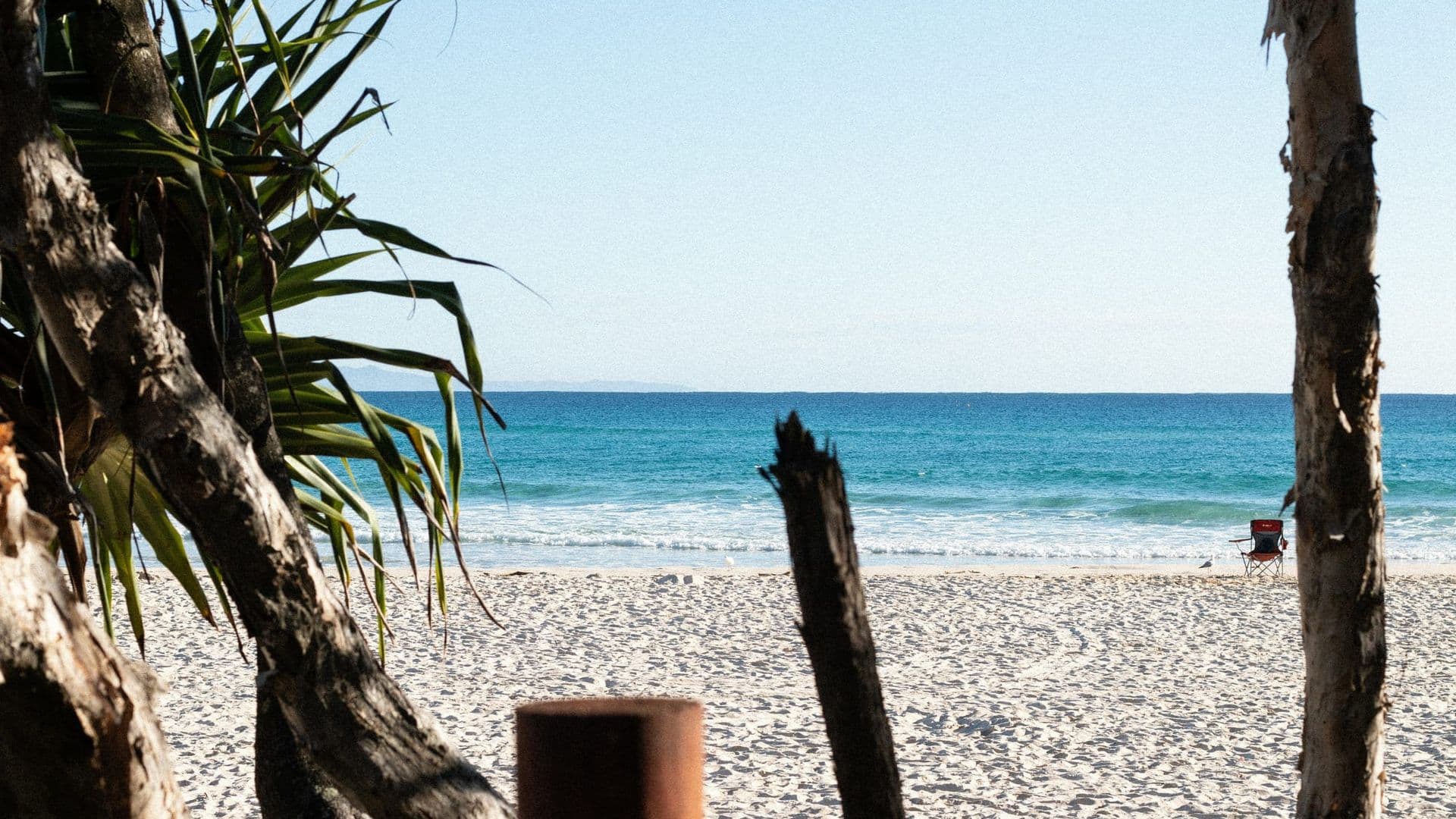
Both islands are stunning, but the day tour experiences could not be more different. Here is an honest comparison of what each island offers — logistics, wildlife, beaches, culture, and value — so you can choose the right trip from Brisbane.
If you are planning a day trip from Brisbane to one of Queensland’s sand islands, you have probably narrowed it down to two options: North Stradbroke Island (Minjerribah) and Moreton Island (Mulgumpin). Both sit in Moreton Bay, both are beautiful, and both promise a genuine escape from the city.
But they are fundamentally different experiences. Choosing the right one depends on what kind of day you want to have. This guide breaks down the practical differences — logistics, wildlife, beaches, culture, group size, and value — so you can book with confidence.
Both islands require a ferry from the Brisbane region, but the crossings are not equal.
Stradbroke Island is reached via a 25-minute vehicle ferry or 45-minute water taxi from Cleveland, about an hour south-east of Brisbane CBD. The crossing is short, sheltered inside the bay, and rarely affected by rough conditions. On a guided tour, your transfer from Brisbane plus ferry adds up to roughly 90 minutes door-to-sand.
Moreton Island requires a 75-minute ferry from Holt Street Wharf in Pinkenba. The open-water crossing can be choppy, particularly in winter. Round trip, you will spend about two and a half hours just on the boat. Combined with the Brisbane transfer, that leaves roughly four to five hours of actual island time on a standard day tour.
That difference matters. An extra hour and a half of island time changes how much you can see, how relaxed the pace feels, and whether the day has room for spontaneous stops when something interesting appears.
This is worth addressing because it affects how you think about tour value.
Moreton Island has no sealed roads, no public transport, and no taxis. Without a 4WD — and experience driving on soft sand — you are confined to the Tangalooma Resort precinct if you arrive as a foot passenger. The famous sand dunes, remote beaches, and Cape Moreton lighthouse remain inaccessible. Even with a rented 4WD, tides dictate which tracks are passable, and inexperienced sand drivers regularly get bogged.
Straddie does have a public bus service from Dunwich to Point Lookout, which sounds promising. In practice, the journey from Brisbane CBD — train to Cleveland, ferry to Dunwich, bus to Point Lookout — takes nearly three hours each way. Once there, the bus does not go anywhere else. You are limited to walking distance of one township, missing Amity Point, Brown Lake, the hidden coves, and the wildlife viewing spots scattered across the island. Six hours of travel for perhaps five hours in one small area.
Renting a car and taking the vehicle ferry costs $150–$200 once you factor in rental, ferry surcharge, and fuel — often more than a guided tour that includes everything plus local knowledge about where to find wildlife.
Moreton Island tours are built around structured adventure activities. The two signature experiences are sandboarding down steep desert dunes and snorkelling the Tangalooma Wrecks — fifteen deliberately sunken ships that create an artificial reef.
Both activities are genuinely fun. Sandboarding delivers a real adrenaline hit, and snorkelling the wrecks is unlike anything else in South East Queensland. If you are the kind of traveller who wants to be doing things — physically active, scheduled, high-energy — Moreton delivers.
The trade-offs are worth knowing. Groups are typically 30–50 people, activities run on fixed time slots, and there is limited flexibility to linger or explore beyond the set itinerary. Wildlife viewing is largely confined to whatever fish you spot while snorkelling. The famous Tangalooma dolphin feeding happens at sunset, which most day tours cannot include because the last ferry departs before dusk.

Stradbroke tours — ours included — are built around discovery rather than scheduled activities. The day unfolds across multiple locations: coastal headlands, freshwater lakes, sheltered beaches, quiet fishing villages, and walking trails through native bush.
The wildlife is the centrepiece. Eastern grey kangaroos graze on the headlands at Point Lookout. Koalas sit in eucalyptus trees near Amity Point. Dolphins play in the shallows year-round. From June through November, humpback whales pass so close to the North Gorge cliffs that you can hear them blow. From December through May, manta rays cruise the waters off Point Lookout. Over 200 bird species make the island their home.
None of this requires luck or special equipment. On any given day, you are likely to see kangaroos, likely to see dolphins, and in season, very likely to see whales from shore. The ecosystem here is simply that rich.

This is where the two islands diverge most sharply.
Moreton Island’s landscape is predominantly sand dunes with sparse vegetation. Terrestrial wildlife is limited. Marine life viewing depends on snorkel conditions and water visibility, which vary day to day.
Stradbroke Island is an established ecosystem with dense eucalyptus forest, wetlands, freshwater lakes, and diverse coastal habitats. The result is an abundance of both marine and land-based wildlife. Kangaroos, koalas, dolphins, whales, manta rays, sea turtles, sea eagles, and over 200 bird species — all observable in a single day without leaving the main touring route.
If seeing Australian wildlife in its natural habitat matters to you, Straddie is not a close contest.
Both islands have beautiful sand, but the beach experience differs.
Moreton Island’s beaches are vast, wild, and exposed to open ocean. They are stunning to look at but not always ideal for swimming, particularly on the eastern side where surf and currents can be strong. Most day tour time is spent at Tangalooma rather than exploring remote beaches.
Stradbroke Island offers variety. Cylinder Beach is a sheltered, patrolled swimming beach that families love. Main Beach stretches for 32 kilometres of unbroken golden sand. And then there are the hidden coves — small beaches tucked into headlands with no signposts, accessible only with local knowledge. A guided tour lets you experience several distinct beach environments in one day.

Both islands are Aboriginal Country with deep cultural significance. Moreton Island (Mulgumpin) belongs to the Ngugi people, and Stradbroke Island (Minjerribah) is the home of the Quandamooka people.
In practice, cultural experiences are more accessible on Straddie. The Quandamooka community has an active presence across the island, with cultural festivals, a cultural centre, and partnerships with tour operators that allow stories and knowledge to be shared with visitors respectfully. The annual Quandamooka Festival in September is a highlight — featuring dance, music, art, and storytelling from one of Australia’s oldest living cultures.
On our tours, cultural storytelling is woven through the day — explaining the significance of places, traditional land management practices, and the Quandamooka people’s continuing connection to Country. It transforms sightseeing into something that stays with you.
This is a practical difference that affects every part of the experience.
Moreton Island day tours typically carry 30–50 passengers. The logistics demand it — the ferry crossing is expensive, the activities are structured, and the resort infrastructure is built for volume. The experience is efficient and well-organised, but it is a big-group experience.
Stradbroke Island tours can run with much smaller groups. Ours cap at 11 guests, which means your guide can adapt the day to what is happening — spending longer at a whale viewing point when a pod appears, or taking a detour to a beach where dolphins have been spotted. You get conversations rather than announcements, and everyone has a clear view at every stop.
Day tour pricing for both islands falls in a similar range, roughly $160–$220 per person. But what is included varies.
Moreton Island tours typically include the ferry, guided activities (sandboarding, snorkelling), and a buffet lunch at the resort. Equipment hire and some add-on experiences may cost extra.
Our Stradbroke Island tour includes Brisbane hotel pickup and drop-off, all ferry crossings, island transport, a full day of guided wildlife and cultural touring, lunch featuring local specialities, and a complimentary drink. Everything is covered in one price with no hidden extras.
Choose Moreton Island if: you want adrenaline-driven activities. Sandboarding and snorkelling the wrecks are unique experiences that Straddie does not replicate. If scheduled adventure is your priority and you are comfortable in large groups, Moreton delivers exactly that.
Choose Stradbroke Island if: you want to see wildlife, explore different landscapes, learn about Aboriginal culture, and move at a pace that lets you absorb where you are. If your ideal day trip involves standing on a headland watching whales breach while kangaroos graze behind you, Straddie is the island.
For most visitors — particularly those who value wildlife, natural beauty, cultural depth, and a more personal experience — Stradbroke Island is the stronger choice. But there is no wrong answer. Both islands are genuinely special parts of South East Queensland.
Absolutely. If you have multiple days in Brisbane, doing both gives you a complete picture of Moreton Bay’s sand islands. Many of our guests have done Moreton on one day and Straddie on another, and they are always surprised by how different the two experiences feel.
Straddie’s patrolled swimming beaches, calmer pace, and wildlife encounters make it a natural fit for families with younger children. Moreton’s sandboarding tends to appeal more to older kids and teenagers who want physical thrills.
Both islands are year-round destinations. Straddie has the edge in seasonal wildlife: whale season runs June through November, and manta ray season runs December through May. Dolphins, kangaroos, and koalas are present every day of the year.
Small-group tours like ours fill up faster than large-group departures. During peak season (June–October for whales, December–January for summer holidays), booking a week or two ahead is wise. Moreton tours with larger capacity are usually available on shorter notice.
Stradbroke Island Tours
Local guides sharing insider knowledge about North Stradbroke Island since 2020.
Book your eco-certified day tour from Brisbane to North Stradbroke Island.
Book Now